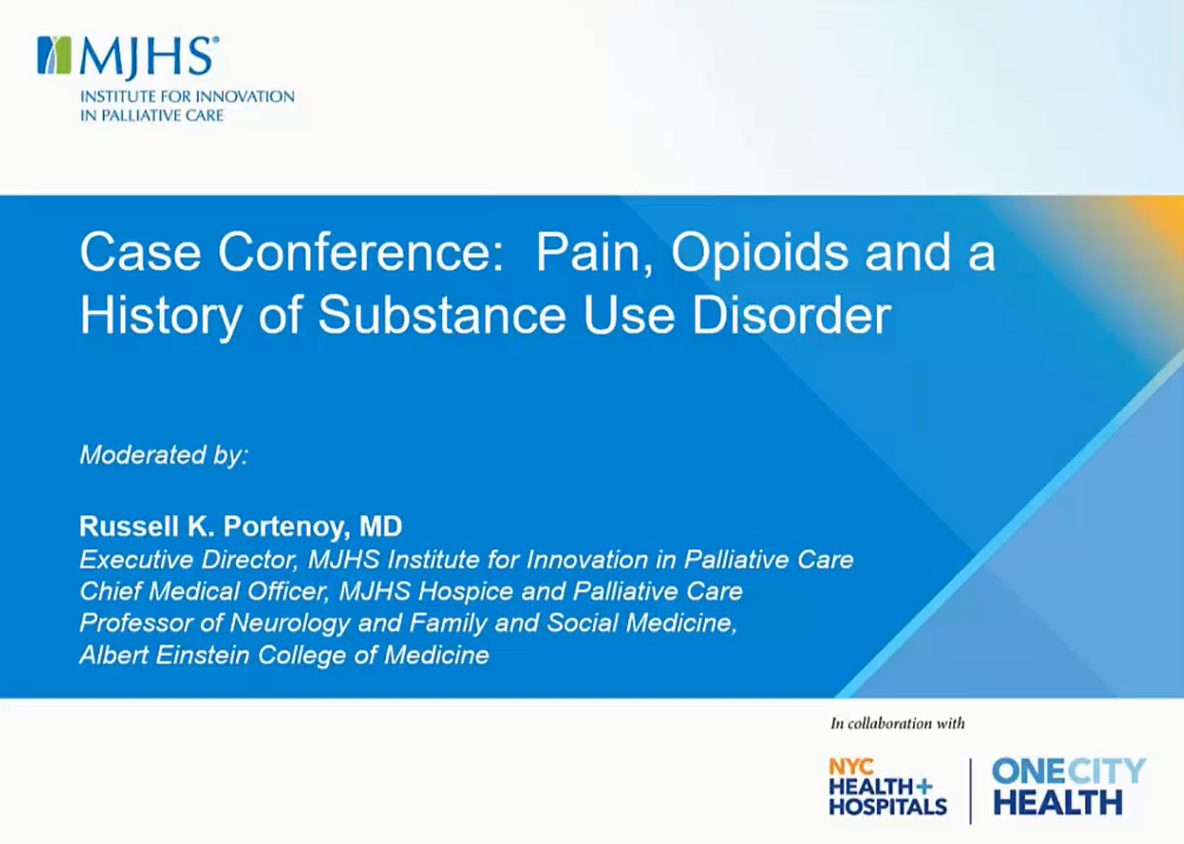
Purpose: The management of chronic pain in patients with a comorbid substance use disorder (SUD) is challenging for both patients and clinicians; however, it can be done successfully. In this module, a case study featuring a 69-year-old man with a history of alcoholism and persistent pain after limb-sparing resection of an osteosarcoma is examined. Participants are provided with an in-depth analysis of the patients’ health conditions, medical background, medication, and treatment strategies.
Speaker Name and Title:
Russell K. Portenoy, MD
Executive Director, MJHS Institute for Innovation in Palliative Care
Chief Medical Officer, MJHS Hospice & Palliative Care
Target Audience: palliative care specialists, pain specialists, primary care providers, nurse practitioners, registered nurses, advanced practice nurses, registered nurses with a specialty in palliative care/hospice, pharmacists, allied health professionals, fellows, residents, and medical students.
Learning Objectives:
1) Improve the assessment of chronic pain after surgery and treatment risk in those with chronic pain and a history of substance use disorder
2) Employ first and second-line pharmacotherapy for the treatment of chronic pain after surgery
3) Enhance the safe use of opioid therapy by a best practice approach to careful patient selection
4) Employ best practices when opioid therapy is necessary for the patient with a history of substance use disorder
5) Initiate and maintain on adjuvant pharmacotherapy for pain management
6) Understand when referral for specialist care is necessary during the management of the patient with chronic pain after surgery
Training Initiative: Healthcare Transformation, Primary Care/Chronic Disease
Title: Palliative Care Series: Management of Chronic Pain and Substance Use Disorder
Training Mode: Online
Contact Hours: 1h
Type: Certificate



Comments